
Our Legacy – a Hellish Human-Built Landscape?
In Recognition of USA Overshoot Day (March 16th), a warning sign for our times

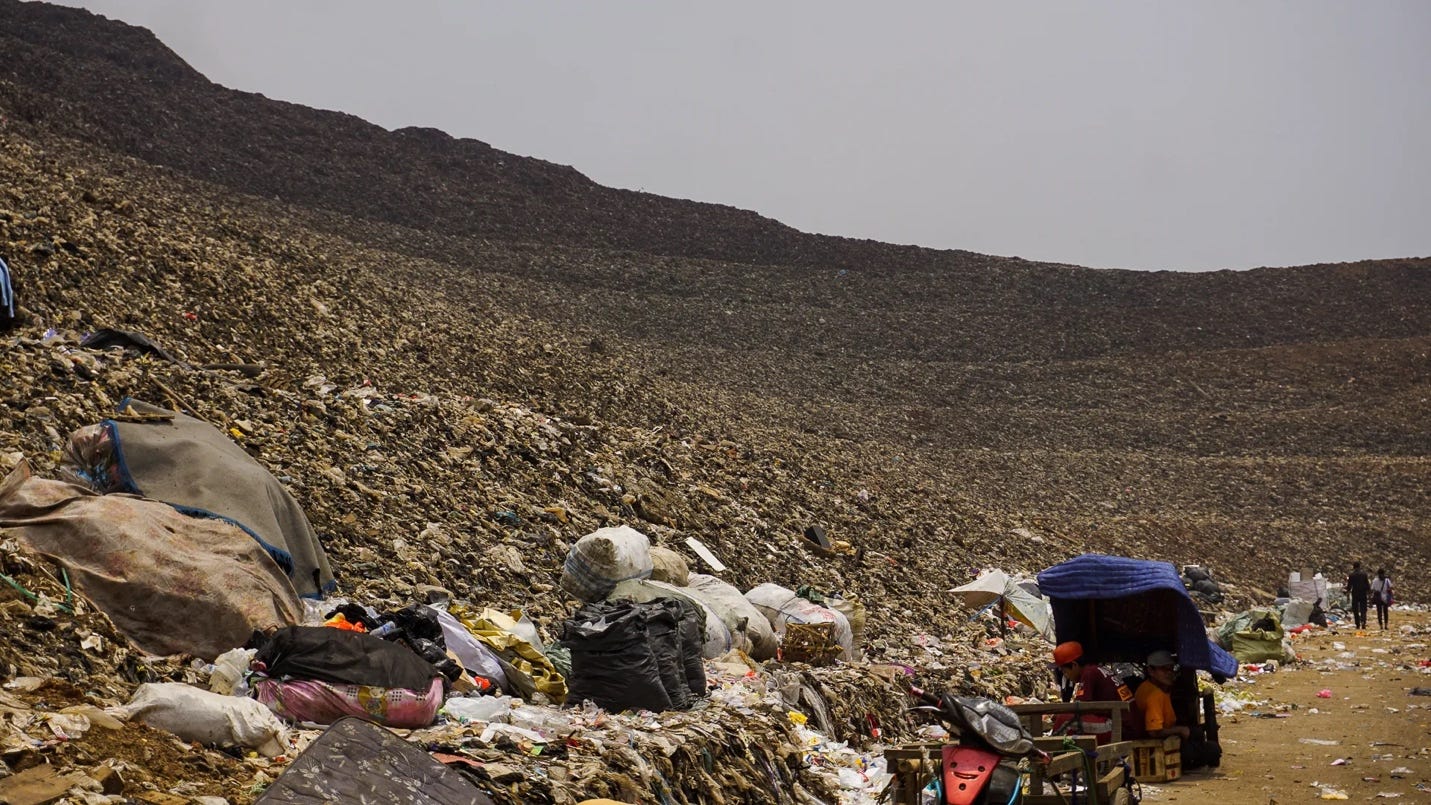
Image: a mountain of trash in Indonesia
Recap
The preceding six-post series addressed the four interrelated dimensions of size, scope, scale, and speed using a Spaceship Earth metaphor. The time devoted to exploring and writing about these systemic dimensional interrelationships has proven very worthwhile in expanding my knowledge and understanding. I anticipate applying this information as I continue exploring future social and ecological topics within this Substack’s inclusively broad theme – Our Human Story and Future Sustainability.
Actually, this post further illustrates how the four physical dimensions are involved in measuring the size, scope, scale, and speed of socio-ecological degradation globally. I think you’ll agree that the contents provide ample evident of humanity’s colossal footprint on planet Earth. It particularly reveals the overwhelming impact of human population, especially as related to gross overconsumption of natural resources and the resultant waste products increasingly embedded in all natural systems – our air, water, soil, and all lifeforms.
Population Growth, Ecological Footprint and Socioecological Overshoot
Humanity’s Population Size and Growth. The last two centuries have proven to be an historical anomaly, an era of dramatically accelerating population growth, especially throughout the 20th century to the present. The drivers of economic and population growth rest with the advances made in societal systems, notably energy, medicine, agriculture, and technology. Collectively, these systems have served to reduce mortality and hence support larger populations.
According to the World Population Clock, global population is around 8.3 billion people, and is growing at a rate of around 0.84% per year in 2026, with an increase estimated at about 69-million people per year. India and China, the two top-ranking countries, are both approaching 1.5-billion people.
The overall growth rate is falling, from an annual 0.97% in 2020 to 0.85% in 2025. Unsurprisingly, these falling rates are especially frightening to economists, corporations, and politicians who collectively voice misinformed protestations and distressing concerns about declining economic growth and, most pointedly – loss of future consumers. It seems a renewed era of pronatalism is upon us.
Although there is no scientific consensus regarding Earth’s “carrying capacity,” increases in population and economic growth automatically place demands on all natural materials (food, water, land, energy), which automatically amplify ecological impacts. Of course, the principal driver of consumption is population growth – in size, scope, scale, and speed
Ecological Footprint and Overshoot. Ecological footprint is measured by the amount of biologically productive land and water required to support humanity’s consumption and absorb its waste products. As I’ve mentioned numerous times, humanity is in ecological overshoot by a wide margin, with global consumption of natural resources proceeding around 1.7–1.8 times faster than Earth’s ecosystems can regenerate annually.
Earth Overshoot Day for individual nations marks the date when a nation – or all of humanity – consumes more ecological materials than the Earth can generate in that year. For example, USA’s 2026 date falls on March 14th, ranking eighth place among all nations. First place goes to Luxembourg (February 14th), and, in sequential ranking: Singapore, Kuwait, Mongolia, Canada, UAE, & Bahrain. Honduras ranks last on November 27th, 2026.
The globally averaged date in 2025 fell on July 24th, and this year’s date is expected to be earlier, yet to be predicted. It’s important to know that the announced date indicates the point at which humanity begins to liquidate natural capital and accumulate a waste/ecological debt. No, we will never be able to pay it back, at least not in our lifetimes.
The ranking shows that high-income countries consume vastly more per person than lower-income nations. The reality is that, if everyone lived like the average U.S. resident, the rest of humanity would require about 5 Earths to live a similar lifestyle, which is plainly unsustainable. Fact: Each year over 100-billion tons of materials are extracted globally for human use. Just imagine the amount of energy and materials needed to clean up and rebuild war-torn countries in coming decades, notably in Gaza, Ukraine, Iran, and countries affected by the US-Israel-Iran War.
Waste Generation Trends and Statistics. The negative impact of excessive consumption is the generation of municipal solid waste and other waste streams, all of which are expanding rapidly as economies grow and urbanize, and overpowering many waste management systems. Over the past 70 years plastic wastes have increased exponentially – from 2-million tons in 1950 to over 450-million tons currently. The generation of human waste materials is considered the top-ranking polluter of air, water, and soil ecosystems.
Electronic waste is one of the fastest-growing waste streams globally. Since 2010 the volume of discarded e-waste material has nearly doubled, with 62-million metric tons generated globally in 2022. Over three-quarters of e-waste remains undocumented, and e-waste generation is expected to exceed 80-million metric tons by 2030. Plastic Overshoot Day – the date when produced plastic exceeds Earth’s capacity to process and manage it – fell on September 5th in 2025. Sadly, nearly one-third of plastic use is mismanaged (not recycled).
It’s important to understand that the above elements are interconnected. Population growth increases total demand for all essential resources, a demand that multiplies high per-capita consumption, as is the case in the U.S. Consumption patterns (lifestyles, industrial production, transportation, and food systems) drive waste emissions and degrade ecosystems, regardless of population size and growth.
Finally, waste isn’t only garbage. It also includes greenhouse gases like carbon dioxide and methane, water pollution, and toxic by-products that the Earth’s systems struggle to absorb. The video featured in this post illustrates this truism powerfully. In sum, everything in this overshoot section is increasing in all four dimensions: size, scope, scale, and speed.
One Hour of Hell on Earth – A Must-See Video
This section provides information that vividly illustrates the vast extent of our human footprint and overshoot on Spaceship Earth. Recently, on Facebook I was introduced to 1 Hour of Urban Hell on Earth, a highly provocative video produced by Worldspire. In viewing it, I found the visual depictions of vast human-built environments extremely depressing. Included are scenes of over-crowded, traffic-jammed, polluted cities and waterways, along with gigantic mounds of waste dumps.
My overall takeaway from viewing this video? What an awful way to live! My family and I are so very fortunate, and deeply grateful, for having been spared living in such disparaging conditions. I imagine you’ll react with similar expressions of gratitude. For those of us who are sheltered from such frenzied living conditions, offerings like Hell on Earth can help reveal the conditions under which a majority of humans struggle to survive.
Two negative effects of urban life not featured in the video are the excessive amounts of urban-noise pollution and night-lighting pollution. Both noise and night lighting can be considered dangerous to the health and wellness all lifeforms – humans and pets, wildlife and plants.
Background information regarding the principal sources of humanity’s hubristic madness was provided in the Ecological Footprint and Socioecological Overshoot section above. The key themes covered in the video include: the claustrophobic design of high-density, “packed” living spaces lacking green space and proper infrastructure; the harsh environments dominated by concrete, asphalt, and stone; and the intense development of coastlines that, despite “sea views”, foster a sense of isolation. These three overpowering impacts show that size, scope, scale, and speed are involved in producing an increasing growth of population, consumption, and waste products.
Try this mental-imaging exercise: As you view the video, imagine the human transformation of former pristine natural scenes into the evidenced hellscapes. When traveling through cities or rural areas, I try to visualize a “before-humans’ time”, when the presence of our species was minimal and ecological landscapes remained intact, flush with abundant vegetation and wildlife. The landscapes we now inhabit, notably in the U.S., once offered awesome wilderness vistas, as was the case in most of Earth’s ecoregions.
Regrettably, this is no longer so. Humankind now dominates every habitable zone. We can be a caring ecological species, but will we? Only in good time – and the application of appropriate sustainable behaviors – will our descendants know the truth.
The Video: 1 Hour of Urban Hell on Earth
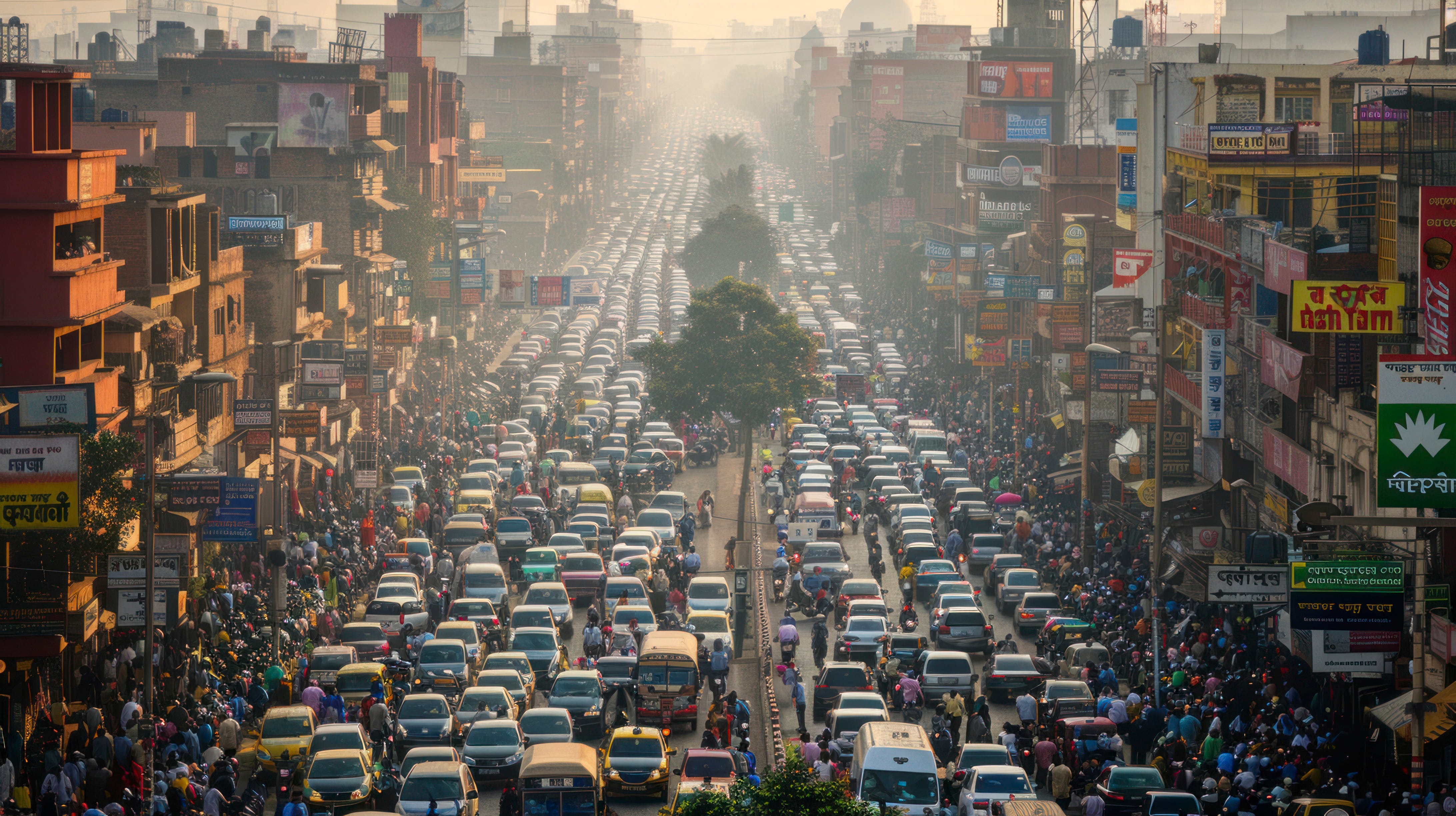
The video features 50 examples of Urban Hell found around the world (#urbanhell), and the above photo illustrates a crowded, air-polluted Indian city.
As I mentioned earlier, because some readers might find the scenes distressing, viewing it in segments might work well. For anyone preferring shorter viewings, I found that it works well in two 30-minute segments. I also found that using 1:25 speed works well and reduces viewing time.
Wrap Up
I think I’ve covered the major points relevant to the theme of this post, so there’s not more to add here. The important task before us is to comprehend the gravity of our collective human predicament, which is evidenced in the depictions of anthropocentric supremacy throughout in the video.
For anyone with sufficient motivation to explore more illustrations of Urban Hell, check out this Worldspire video: 40 Examples of Urban Hell on Earth an additional viewing providing more examples. Another relevant source is a Radio Ecoshock recent podcast War Against the Atmosphere – Iran, with experts reporting on the enormous repercussions affecting our energy use, pollution, climate change, and social disintegration.
What’s coming up next? Good question. I’ve been mulling over writing a three-part series focused on Truth, Goodness, and Beauty, what I perceive as the Transcendental Triad. Another option addresses six principal future-sustainability paradigms, from a techno-optimistic (green-growth) perspective to socio-ecological systems perspective. Also, a follow-up article to the above-mentioned Radio Ecoshock episode is an intriguing possibility.
Stay tuned!
Clif
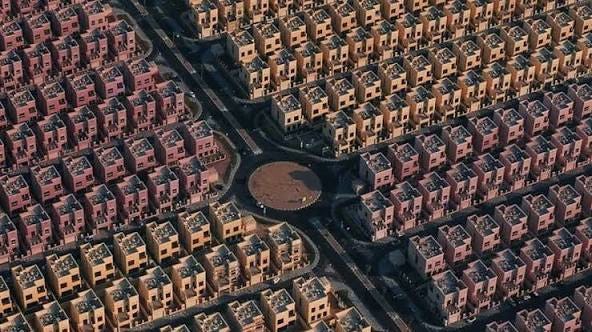
Image: a monotonous, impersonal urban-residential community