
Downsizing for Life’s Final Stage, Part 1
Deciding it’s time to downsize unnecessary possessions

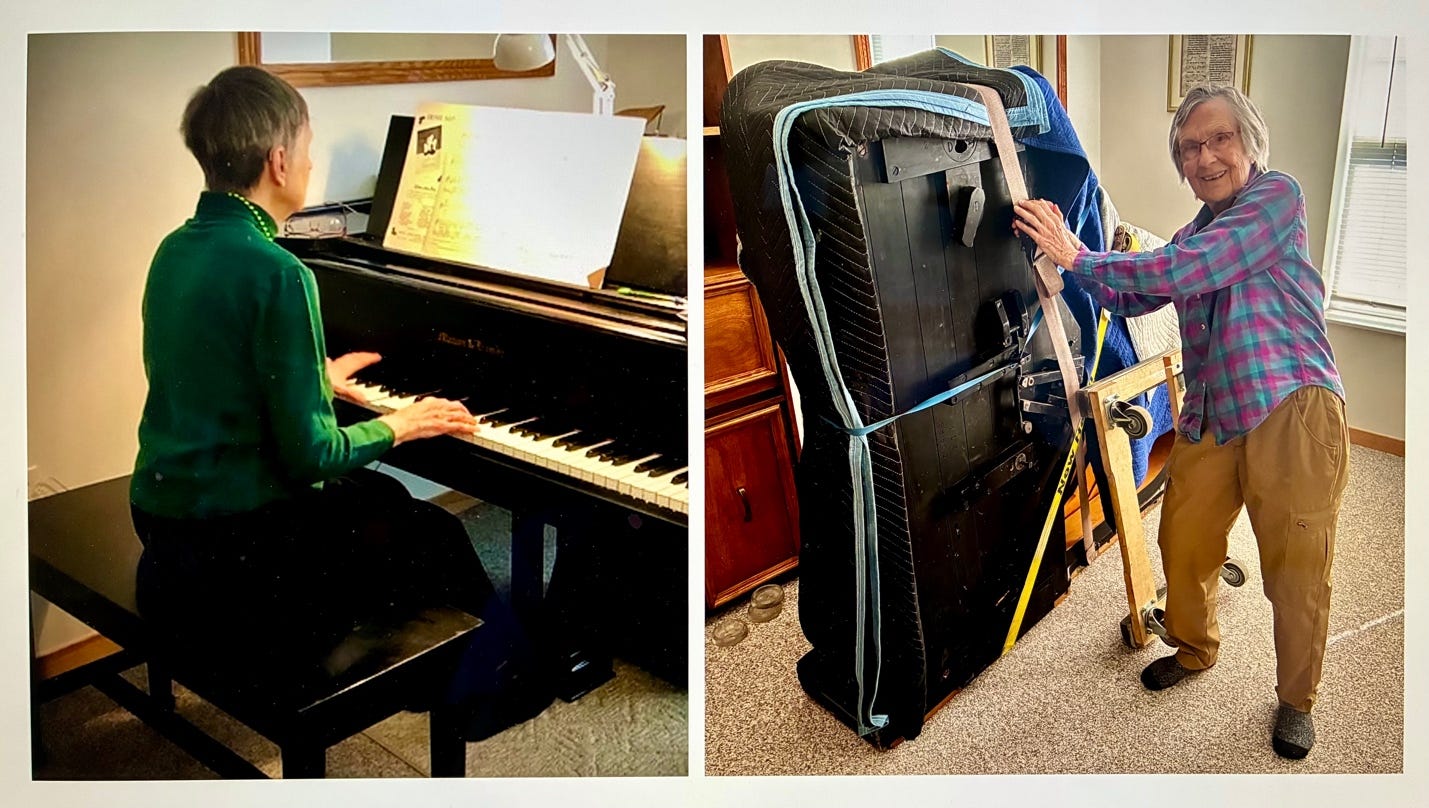
Our dependable music-making piano—recently gone!
Update
Welcome back! I’ve not posted since the end of May, and perhaps you haven’t noticed. Getting back in the writing routine is gradually improving.
This post (and another one or two) departs somewhat from the more substantive topics presented to date. As mentioned in the previous post, in preparation for our final years on planet Earth, my wife (Bettye) and I have renewed our long-standing goal to create a more simplified lifestyle. Although we’re both well for our ages, we remain aware of the inevitable processes associated with declining health, dying, and death.
Like most elderly folks, we prefer to remain in our home for as long as possible, and moving into a long-term care complex only if and when needed. Should one or both of us require such a move, with the assistance of family members necessary arrangements will be taken. Anticipating such a possibility is mildly discomforting, but realistically sensible.
Having accomplished most of our downsizing objectives over the past several weeks, we have been reminded how every material possession demands some degree of attention. The time gained from having less stuff to monitor should provide greater freedom for pursuing more constructive interests—a hobby, or more participation in group and community activities. For certain, we’ll also need more time and energy for dealing with a range of aging issues.
You’ll probably agree that, at all stages of life, downsizing to simplify life is a worthy goal, not only for individuals but also for families, communities, states, and nations. Assuming this is an accurate assessment, the next two posts will focus on various aspects of downsizing material possessions, along with other preparations anyone can take to enhance the overall quality of life and mind-body wellness.
It’s no secret that we modern humans are overstressed. A daily salvo of bad-news, especially unexpected socio-political and ecological developments, is affecting our ability to cope with life’s many challenges. Sadly, most people are simply unaware and underprepared for what lies ahead: an increasingly uncertain future. As regular readers know, I’ve consistently addressed resilience and sustainability concerns since beginning this Substack (Our Human Story and Future Sustainability).
This series of downsizing posts addresses the need for persons alive today, young and old, to become as resilient as possible, which will require adapting and adopting appropriate concepts, methods, and techniques. Our brief backstory partially explains the relatively short-term timeframe we older generation folks have for developing a resilient end-of-life journey.
Our Backstory
In 2005, when we were preparing to move from a typical suburban home to a nearby condo community, we set about unloading unessential possessions. In the process we also reduced a load of home maintenance responsibilities related to indoor and outdoor upkeep. Outdoor maintenance required equipment for managing outdoor facilities—a deck, a garden-equipment shed and fence, steps, and driveway, plus lawn, plants, and especially trees, which can require considerable attention. The physical work was getting a bit too much for my 70-year-old body, so I welcomed the prospect of turning such duties over to younger professional specialists.
For certain, it has been relief to no longer clear snow on sub-zero days, mow lawns on hot summer days, climb a tall ladder to clean upper-level outside windows, or scale a ladder from the deck to the roof to trim our neighbor’s overhanging tree limbs.
I’m particularly content to miss annual trimmings of a huge buckthorn hedge along the backyard bank adjacent to a scenic marsh pond. The buckthorn invasion also kept me busy removing fast-growing buckthorn sprouts and other plants alongside the steep bank. Disclosure: I didn’t know our lovely hedge was an invasive plant – until reading about it and learning it was too aggressive to eliminate easily. On a positive note, it did serve as an attractive border along the bank ridge.
I mention these physical challenges because considerable types of equipment—plus time, energy, and money—were needed for maintaining everything. For instance, throughout the 21 years we lived in our modest custom-designed-and-built home, the upper-floor deck overlooking our small backyard was seldom used. When considering the amount of upkeep required, including a decade of weathering that resulted in a complete overhaul, it proved to be an inefficient use of funds and an unecological use of scarce redwood lumber. Of course, the deck and deck furnishings—also a redwood garden shed, fence, and an attached small garden and compost pit—required occasional maintenance.
So, when negotiating with the young couple interested in purchasing our home, we decided to allow all equipment used for outdoor work to remain intact for their use. Among the items gifted were a lawn mower, a snowblower, assorted garden tools (rakes, chainsaw, leaf blower) and other lawn-garden items stored in the 8x8’ garden shed. We were content with this arrangement, and pleased to relinquish all outdoor maintenance responsibilities.
Adjusting to Condo Life and Downsizing
After moving into our condo in 2006 and maintaining two autos for a year (until my scheduled retirement from university teaching in 2007), we decided to get by with a single vehicle (the first time since 1962). After a short adjustment period, we were glad to have only one vehicle to maintain, insure, and license.
Later, as we were no longer teaching (piano for Bettye, voice for me), we eventually decided to donate and gift most of our professional publications (music scores, books, etc.) to music institutions, former students, and colleagues. Since then, we’ve not missed storing unused publications, including the filing cabinet and shelves that contained them. As the photo above illustrates, letting go of our baby-grand piano has been the most significant possession donated in this downsizing cycle.
I think you have an idea of where I’m going with this downsizing story. More relevant information can be found on an earlier post—What Level of Consumption is Sustainable?, which described the high levels of consumption most middle-class Americans practice. Our history of lifetime consumption is explained, and I think you’ll agree our pattern is common among persons living in so-called “developed countries”.
For certain, like most Americans, particularly older generations, we have grown comfortably accustomed to overconsuming as a way of living a normal American lifestyle. It’s taken our entering old age to realize that, in some ways, we’re not really better off for having used so many natural and human-made materials.
Timing wise, the Covid epidemic arrived as we were entering our early 80s, effectively causing us to slow down and reduce many former activities. Age wise the timeframe wasn’t as disruptive as anticipated, as it helped us prepare and adjust to a slower-paced lifestyle during our remaining years.
Now, after a period of procrastination and inaction, we’ve finally committed to a more intent downsizing operation. We assume our heirs will be grateful for any preparatory actions that lighten future management of our estate, including disposal of most possessions. For certain, they will still inherit plenty of stuff requiring disposal.
Wrap Up
In the next post I’ll report on action taken over several weeks to better position ourselves for our final life stages, including a composite photo showing most of the items disposed of to date. Also, forthcoming will be a report regarding recent formation about Senior-Living Options, an exploratory community project we’ve formed that serves the elderly residents of our condo association.
As with all major endeavors, getting started is the hardest hurdle to overcome. When we first listed the steps and stages required for downsizing, this project seemed overwhelming, especially given our ripened ages. But, when compared with previous major moving and downsizing ventures, this operation has proceeded within a more relaxed timeframe and manageable pace. Now that the bulk of work is accomplished, we’re glad we undertook the challenge.
In preparation for additional downsizing postings, I urge giving attention to your possessions. Are you able to manage your possessions effectively, or do they sap your time and energy? What things are unnecessary and can be disposed of properly? What can be trashed, recycled, or composted? Finally, what can be gifted, donated, or sold?
The main goal should be to lighten responsibilities in maintaining excessive, unused, and unnecessary material possessions. It’s burden-relieving to let go of unessential possessions, and gain more time for directing life energy in accomplishing worthwhile explorations and adventures—individually, with loved ones and friends, and all beings.
Let’s go for it. The downsizing process begins with rethinking how we humans are interconnected with all that exists, followed by taking steps to reduce, reuse, and recycle all material things in our possession. Finally, in the downsizing process, we need to do whatever possible to help restore and regenerate our planet’s deteriorating bio-ecosphere.
Please join us in this life-enhancing endeavor.
Clif (with Bettye Ware, reader/editor/partner)
I’m not far behind you, Clif. We need to do more of this. We had a junk hauler just take everything in the shed and garage attic. Stuff we haven’t used or even seen in years! In my next life, I’m coming back as a minimalist. I also took a couple decades of old financial records to the shredder. It was two paper lawn bags of records!! Got rid of my piano too. The circle of life. Your approach to aging is so healthy. Bravo!
This is such a timely post, especially as we move into the retirement phase. We did downsize once already, but as you know, nature abhors a vacuum and we have continued to acquire more "stuff". I look forward to reading more about your journey. Thank you for sharing it with us. -Allin